Note-Taking Web App
React Js : Express Js : MySQL : Live
In the modern digital landscape, the need for efficient and
collaborative note-taking solutions has never been more critical. Our
project,
Writer
addresses this need by providing a robust, user-friendly web
application designed to enhance productivity, streamline data
management, and foster seamless collaboration.
This blog post offers an in-depth look into the development of Writer,
covering its objectives, features, development process, tools used,
challenges faced, and future plans.
What Were the Objectives of the Project?
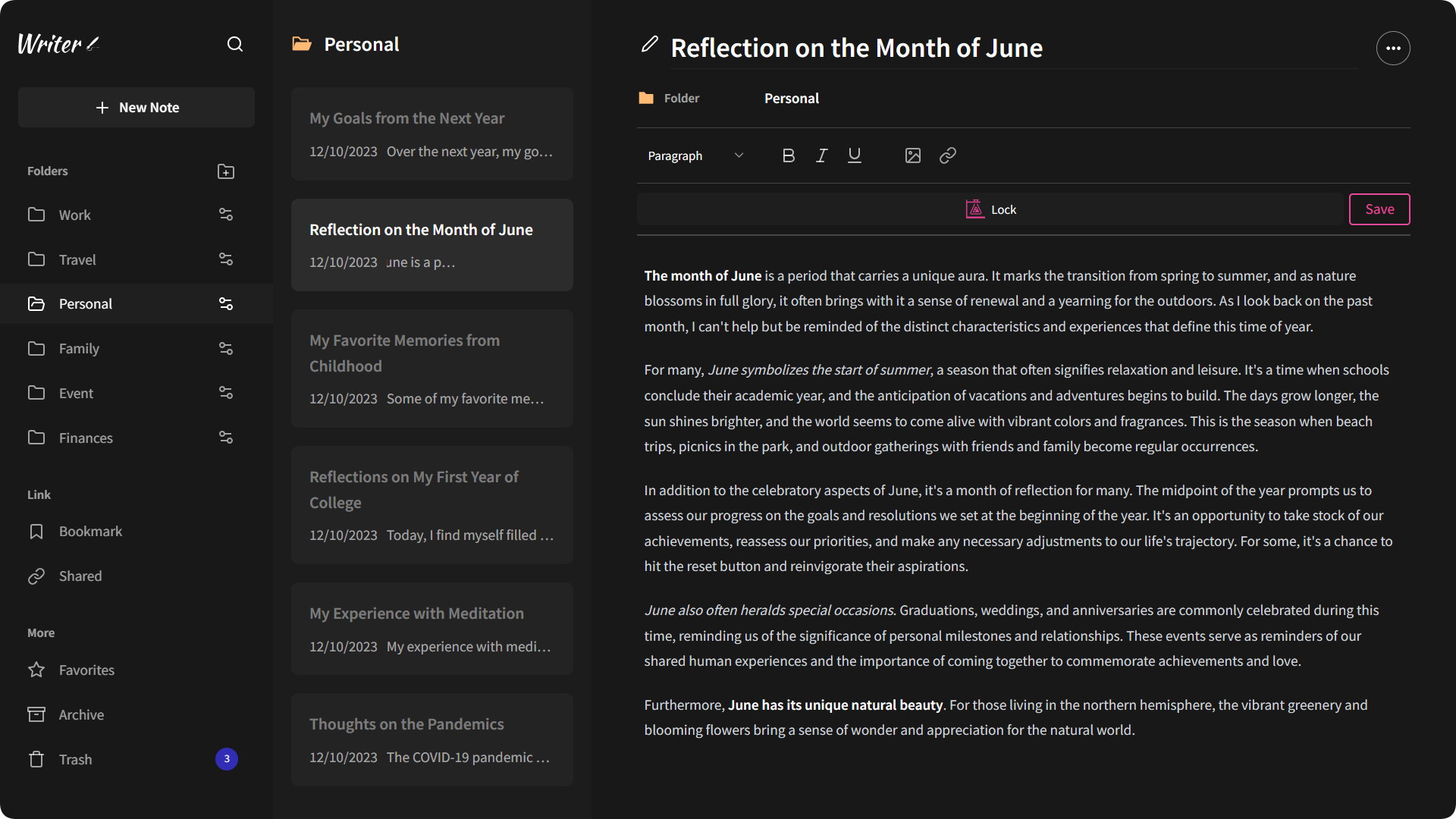
The journey of creating Writer began with a simple idea: to develop a tool that would help users manage their notes and collaborate with others more effectively.
The key objectives driving this project include:- Enhancing Productivity: By providing users with a centralized platform for note management, Writer aims to boost productivity by minimizing the time spent on searching for and organizing information.
- Streamlining Data Management: Features such as folder organization and advanced search capabilities streamline the process of managing large volumes of notes and documents.
- Fostering Collaboration: By enabling real-time editing and sharing of notes, Writer promotes teamwork and knowledge sharing within organizations and communities.
What Are the Key Features of the Note-Taking Web App?
Writer is packed with features designed to meet the diverse needs of its users:
- User Registration and Authentication: Ensuring data privacy and security through secure registration and login processes.
- Folder and Note Management: Users can create, edit, delete, and organize notes within folders, making note management efficient and effective.
- Search Functionality: A powerful search feature helps users find specific folders and notes, including those archived or in the trash.
- Bookmarking: Users can bookmark important shared notes for easy reference and quick access.
- Note Sharing and Collaboration: Real-time updates on shared notes allow seamless collaboration. Note owners have control over shared notes and can delete shared links as needed.
How Was the Development Process Structured?
Developing Writer involved several key stages, each crucial to the project's success:
- Planning and Design: This phase involved extensive research and planning to define the application's structure and functionality. The design focused on creating an intuitive and visually appealing user interface.
-
Development: Utilizing cutting-edge web
technologies, the development phase brought the application to life.
Key technologies included.
- Frontend: JavaScript with React.js, HTML, and CSS for creating dynamic and interactive user interfaces.
- Backend: Node.js with the Express.js framework for server-side logic and API endpoints.
- Database: MySQL for managing data efficiently.
- Filter Your Data: Choose seasons, teams, or players to filter your data and focus on specific insights.
- Testing: Rigorous testing ensured the reliability and functionality of the application. This included unit tests, integration tests, and user acceptance testing.
- Deployment: The application was deployed on robust server hardware, ensuring high performance and reliability during peak usage times.
What Tools and Environments Were Used?
A variety of tools and environments were strategically employed to streamline the development and deployment process:
- Operating Systems: Developers had the freedom to choose between Windows, macOS, or Linux, providing a stable development environment.
- Code Editors: Options like Visual Studio Code , Atom, Sublime Text and JetBrains WebStorm enhanced productivity and code quality.
- API Development Tools: Postman and Insomnia facilitated testing and debugging of API endpoints.
- Version Control: Git, along with platforms like GitHub, GitLab or Bitbucket facilitated collaboration, code review, and version management.
What Challenges Were Faced and How Were They Solved?
During the development of Writer, several challenges were encountered and successfully overcome:
- Scalability Issues: Ensuring the application could handle a large number of users and data entries was critical. This was addressed by optimizing database queries and implementing efficient server-side logic.
- User Experience Design: Creating an intuitive user interface required several iterations and user feedback sessions to ensure a seamless user experience across different devices and screen sizes.
- Data Security: Implementing robust security measures to protect user data was paramount. This involved secure authentication processes and data encryption techniques.
What Are the Future Plans for Writer?
Looking ahead, several enhancements and additional features are planned to further improve Writer:
- Mobile Application Development: While currently out of scope, developing dedicated mobile applications for iOS and Android is a future goal.
- Real-time Collaborative Editing: Enhancing the real-time collaboration feature to allow multiple users to edit notes simultaneously.
- Offline Mode: Implementing an offline mode to enable users to access and edit notes without an internet connection.
Credits
The project UI for Writer is inspired by the UI of
Saeful Barkah's Nowted App
on GitHub. While I drew inspiration from this UI design, I made
several modifications and added numerous functionalities using
React.js to tailor it to the specific needs of Writer.
The backend, however, is entirely my own creation,
developed to ensure robust performance and seamless integration with
the enhanced frontend.
A special thank you to Saeful Barkah for providing the
initial inspiration and foundation that helped shape the user
interface of Writer.
Conclusion - Note-Taking Web App
The development of Writer has been a testament to the power of
innovation, collaboration, and a user-centric approach. By providing a
comprehensive note-taking and collaboration solution, Writer is set to
transform how individuals and teams manage their information and work
together.
Stay tuned for future updates and enhancements as we continue to
evolve and meet the growing needs of our users.
Source Code:
GitHub (Private)